
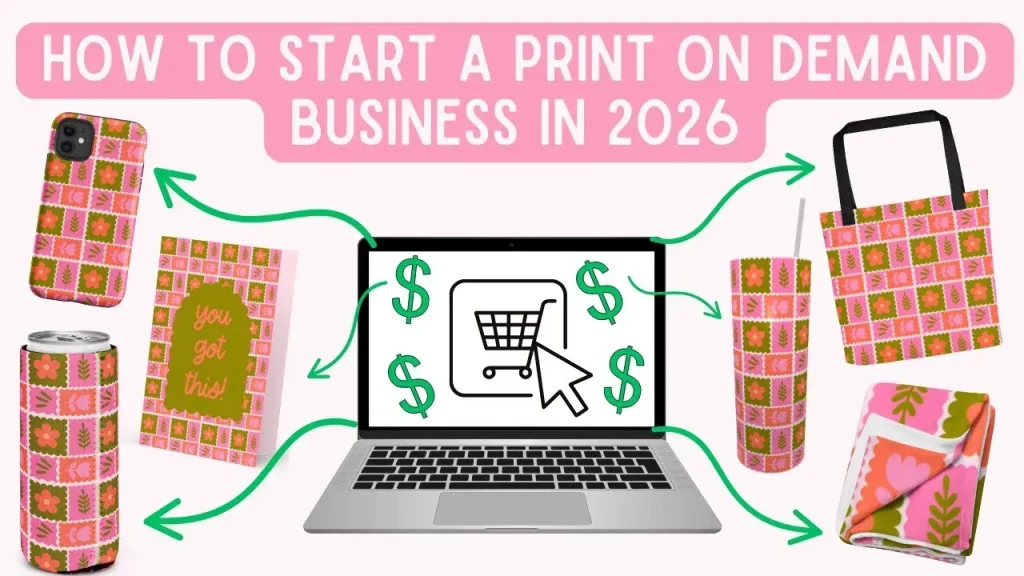
Understanding print on demand platforms 2026 is essential if you’re launching or scaling a product line this year. POD covers a wide range of services that print your designs onto apparel, accessories, home decor, and more, only when a customer places an order. For SEO, this guide follows a POD platforms comparison and explains how to choose a print on demand platform, with notes on best POD services 2026. A well-chosen platform can reduce risk, speed time-to-market, unlock global reach, and clarify the print on demand pros and cons. In the following sections, we’ll outline core benefits, trade-offs, and a practical framework to pick the best fit for your store.
Beyond the jargon, the core idea is order-triggered production via on-demand printing networks that sync with your online store. These print-on-demand services, private-label fulfillment, and dropship providers share a goal: deliver customized goods without holding inventory. As you explore options, consider private labeling, embroidery and all-over print capabilities, and the speed and reliability of regional production partners. Adopting this model reduces upfront risk and supports rapid experimentation with product variations. The practical takeaway is to map your product strategy to the strengths of your chosen provider within a modern print commerce framework.
print on demand platforms 2026: Navigating the Evolving POD Landscape
With 2026 as the backdrop, print on demand platforms have moved from niche shirt printers to comprehensive partners that cover production and fulfillment across worldwide networks. Modern POD platforms bundle production, fulfillment, and integrations with major e-commerce channels, enabling you to design catalogs, sync with your storefront, and rely on the platform to print, pack, and ship orders on demand. This shift reduces upfront inventory risk, shortens time-to-market, and opens global reach for brands of all sizes.
As you evaluate options, adopt a systematic approach to the POD landscape: consider catalog breadth, print quality, speed, and branding capabilities. A POD platforms comparison helps you identify providers that excel in your priority areas, whether you need fast turnarounds, white-label packaging, or private labeling. For teams new to this space, map requirements to the criteria used in the how to choose a print on demand platform framework, ensuring you select a partner aligned with your business goals and margin targets. Also keep an eye on long-term scalability and API reliability to support growth.
POD platforms comparison: How to choose the right fit
Choosing the right partner requires comparing options across key dimensions: production quality and color accuracy, catalog breadth, geographic reach, and platform integrations. In a dynamic market, a thoughtful POD platforms comparison helps you separate vendors that offer quick prints from those delivering consistent color fidelity and durable fabrics at scale.
Practical selection criteria include sample testing across core products, evaluating embroidery versus all-over print, and checking how the platform handles volume discounts, private labeling, and multi-store synchronization. If your aim is to optimize for price without sacrificing reliability, consider the trade-offs between networks emphasizing price competitiveness and those prioritizing quality and consistency. This is where the how to choose a print on demand platform framework pays off, guiding you through experiments and stage-gated decision points.
Best POD Services 2026: What Sets Top Providers Apart
Top POD services in 2026 often differentiate themselves by quality control, consistent white-label options, and robust automation. When you assess candidates for best POD services 2026, look for providers that offer reliable color management, fabric sourcing transparency, and private labeling capabilities that scale with your branding.
Beyond surface features, consider how well the service integrates with your tech stack and marketplaces. Printful, Printify, Gooten, SPOD, and Apliiq are frequently cited examples across case studies and industry discussions. Each has strengths: some prioritize broad catalogs and regional production, others emphasize speed or private labeling. Align your choice with your product strategy and margin goals to land on the best fit.
How to choose a print on demand platform: A Practical Framework
Start with a structured framework that mirrors real-world buying decisions. Step 1 defines your product strategy: identify core product types, target price points, and the channels you’ll use (Shopify, Etsy, WooCommerce). This roadmap makes it easier to compare POD platforms against your actual needs rather than generic feature lists.
Step 2 through Step 8 cover print quality, costs, catalog coverage, integrations, geographic reach, policies, and live testing. In practice, test print samples across your top products to verify color accuracy and durability; calculate landed price including base costs and shipping; and verify how the platform handles returns and support. This practical process aligns with the advice on how to choose a print on demand platform and minimizes post-launch surprises.
Print on Demand Pros and Cons in 2026: Balancing Costs and Control
Pros include low upfront investment, broad product catalogs, and fast experimentation, which enable lean brands to test ideas before committing to inventory. Global fulfillment networks help reach international customers with reasonable delivery times, while integrations with major storefronts simplify operations and automate order routing.
Cons to anticipate include thinner margins on low-priced items, color matching variability, and potential delays tied to third-party production. Platforms’ policy changes and API stability can also affect reliability, so it helps to diversify suppliers or use a blended approach. Understanding these trade-offs is essential for a sustainable POD strategy in 2026.
Scaling with POD: Integrations, Global Fulfillment, and Automation
Growth-focused brands rely on seamless store integrations (Shopify, Etsy, WooCommerce) and automated workflows to keep orders flowing. Look for real-time stock visibility, bulk product uploads, and robust API access to support custom apps, reporting, and your own logistics plan. A scalable POD setup uses automation not just for fulfillment but for catalog management and pricing updates.
Global fulfillment continues to improve as production facilities expand across regions, reducing shipping times and enabling better margins for international orders. When evaluating scaling potential, consider the platform’s ability to route orders to the nearest facility, offer daylight delivery windows, and support private labeling across markets. In 2026, intelligent automation and regionalized production are central to sustaining growth with POD.
Frequently Asked Questions
What are print on demand platforms 2026 and how do they work?
Print on demand platforms 2026 print products only after customers place orders, handling production and fulfillment and often integrating with major storefronts. They let you design a catalog, sync with your store (Shopify, Etsy, WooCommerce, etc.), and have the platform print, pack, and ship. This approach lowers upfront inventory risk and speeds time-to-market.
How to choose a print on demand platform in 2026?
Use a practical framework: define your product strategy, evaluate print quality and color accuracy by ordering samples, review costs and margins, check catalog breadth and customization options, inspect integrations and automation, assess geographic reach and delivery speed, read policies and support, and test with a small pilot before committing.
What are the pros and cons of using print on demand platforms in 2026?
Pros include low upfront investment, a large product catalog, faster time-to-market, global fulfillment, branding and white-label options, and strong automation. Cons include thinner margins on low-priced items, potential color/quality variation, shipping delays, dependency on provider stability, and platform-specific limitations.
What should I consider when doing a POD platforms comparison for 2026?
Key factors include catalog breadth, print quality and color accuracy, production and shipping speed, total landed cost, store integrations and automation, geographic reach, private labeling options, and support policies. A thorough POD platforms comparison helps you choose the best fit for your product strategy.
Which are the best POD services 2026 for different store needs?
Common choices include Printful (strong quality control and branding options), Printify (competitive pricing and a broad provider network), Gooten (balanced price, quality, and automation), SPOD (fast production and simple setup), and Apliiq (private labeling and apparel customization). The best pick depends on your product mix and target market.
What practical tips help ensure success with print on demand platforms 2026?
Start with a minimal viable catalog, order design-ready samples across platforms, maintain branding consistency in packaging and inserts, plan for shipping and returns, and use order data and customer feedback to continuously optimize print quality and product selection.
| Topic | Key Points |
|---|---|
| Introduction / What POD is (2026 context) |
|
| Understanding the POD landscape in 2026 |
|
| Pros of POD platforms (2026) |
|
| Cons and trade-offs (2026) |
|
| How to choose the right POD platform (framework) — Steps 1–8 |
|
| Quick comparison of leading POD platforms for 2026 |
|
| Practical tips for POD success in 2026 |
|
| What to expect from POD platforms in 2026 |
|
Summary
Conclusion paragraph