
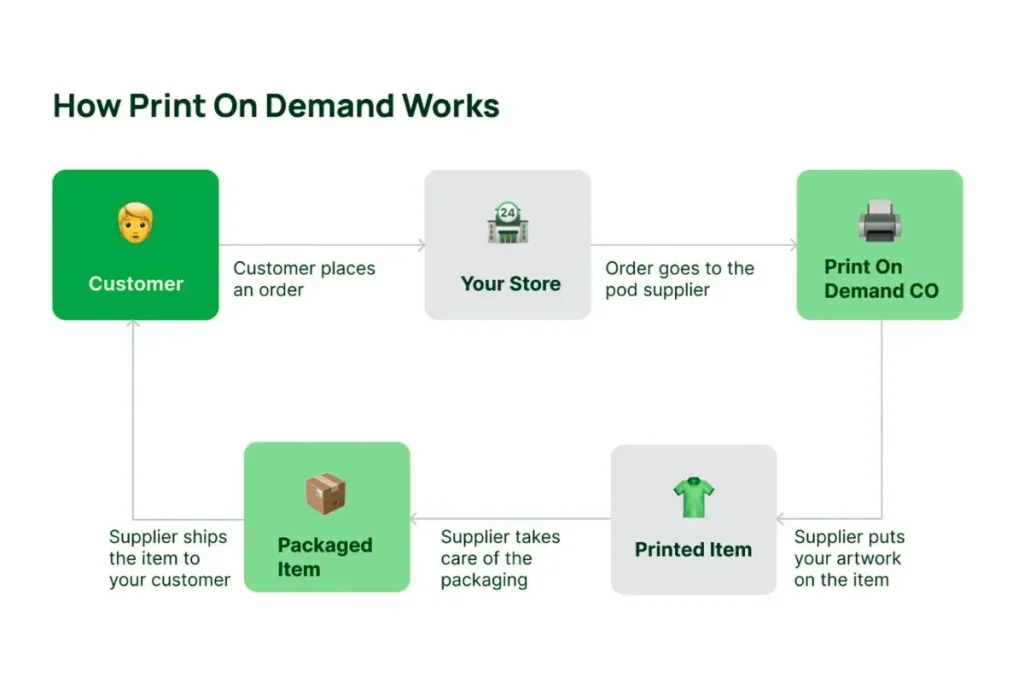
Print on Demand offers a low-risk path to entrepreneurship, letting you design and sell products online without holding inventory. With a POD for beginners mindset, you can test ideas quickly while keeping overheads lean, since items are produced only after a customer orders. This on-demand printing business model supports flexible experimentation and scalable growth as your brand gains traction. By focusing on strong design, cohesive branding, and smart product choices, you can build your brand with POD and embrace a print on demand mindset. As you explore the basics, this guide highlights merchandise for brands and practical steps to launch a successful POD store.
Another way to describe this model is as an order-based production system that eliminates upfront inventory. In practice, creators use print-on-demand services to apply designs to apparel, mugs, and accessories only after customers commit to a purchase. This approach, sometimes called no-inventory ecommerce or custom product fulfillment, lets you experiment with ideas without risking unsold stock. By partnering with a production-on-demand provider and integrating with a storefront, you can maintain agility while focusing on design and storytelling. The core idea is simple: let demand drive production, so your brand can test concepts, iterate quickly, and scale through disciplined product strategy.
1) What is Print on Demand? An Introduction to the On-Demand Printing Business
Print on Demand (POD) is a fulfillment model where designs are printed on items such as apparel, accessories, and home goods only after a customer places an order. This means you don’t stock products or manage fulfillment yourself; you focus on design, marketing, and brand strategy. For beginners, the model offers low upfront costs and rapid iteration, making it an attractive pathway into entrepreneurship.
As a foundation for an on-demand printing business, POD allows you to test ideas quickly and scale when a concept resonates. Working with trusted partners—like print providers who integrate with your storefront—helps you maintain quality while you focus on growing your audience. When done well, Print on Demand becomes more than a sales channel; it’s a central component of your brand identity and product strategy.
2) POD for Beginners: Laying the Foundations for Your Brand
POD for beginners starts with defining a clear niche and a target audience. By understanding who you’re designing for, you can tailor visuals, product choices, and marketing channels to meet their needs. Whether you’re serving hobbyists, students, professionals, or fans of a particular culture, this focus informs every decision and makes POD more than a random assortment of items.
Next, develop a strong brand identity that carries across product pages and social media. A cohesive logo, color palette, typography, and storytelling help customers recognize and trust your designs. Your brand narrative—why you exist and how you help your customers—guides every design decision and strengthens your overall POD strategy.
3) Build Your Brand with POD: Creating a Cohesive Identity Across Products
A successful POD approach treats the brand as an umbrella under which all products live. Consistency in design style, tone, and messaging helps your audience identify your products quickly, no matter the item. This cohesion makes it easier to build a recognizable presence in a crowded market and reinforces your value proposition.
To strengthen brand cohesion, align your product strategy with your visual identity. Choose a core set of items that reflect your niche and aesthetics, and plan colorways and messaging that resonate with your audience. As your brand grows, your designs should feel like a single, unified story rather than a random collection of merchandise.
4) Merchandise for Brands: Designing Purposeful Products Your Audience Will Love
When you think about merchandise for brands, design with purpose. Create story-driven designs that reflect your niche’s values, humor, or aspirations. Limited-edition drops and seasonal themes can maintain excitement and urgency while reinforcing your brand’s identity. This approach helps merchandise feel meaningful and gift-worthy, not just promotional clutter.
Quality matters just as much as concept. Invest in high-quality design files, mockups, and proofs to ensure prints look sharp on chosen materials. Strong visuals—complemented by lifestyle photography and clear usage context—increase perceived value and trust, helping customers see why your merchandise belongs in their everyday life.
5) Pricing, Margins, and Operations: Turning Designs into Profit
Pricing POD products requires careful calculation of production costs, platform fees, payment processing, and shipping. A practical approach is to target a healthy margin (for example, 40–60%) after all costs, while staying competitive. Consider additional expenses like packaging upgrades or branding inserts, and account for returns in your profitability model.
As you scale, monitor fulfillment times and product performance. Bundling items (such as a tee plus a mug) can increase average order value without dramatically raising costs. Regularly re-evaluate pricing and product mix to sustain profitability and ensure your on-demand printing business remains sustainable over time.
6) Marketing and Growth for Print on Demand: SEO, Content, and Community
Marketing is essential to attract, convert, and retain customers in a POD business. Optimize product pages for search with your focus keyword print on demand and related terms, including descriptive alt text and clear specifications. Content marketing—guides, tutorials, and style tips—helps attract organic traffic while establishing authority in the field of print on demand.
A strong marketing plan also leverages social media, email, and partnerships. Share behind-the-scenes sketches, customer photos, and lifestyle images to foster community. Build an email list early and offer design files or early access to drops to convert visitors into repeat buyers. Collaborations with creators or brands within your niche can extend reach and credibility for your on-demand printing business.
Frequently Asked Questions
What is Print on Demand and why is POD for beginners a good path to start a business?
Print on Demand is a fulfillment model where a third‑party printer creates products only after a customer places an order. This reduces upfront costs, minimizes inventory risk, and lets you test designs quickly. For POD for beginners, you can focus on design and marketing while the provider handles production and shipping.
How can I build your brand with POD to create cohesive merchandise for brands?
Start with a clear niche and a strong brand story. Use consistent visuals—logo, colors, typography—and create product lines that reflect your messaging across all items. By building your brand with POD, every product reinforces a single, recognizable identity.
What’s the best way to start an on-demand printing business using a storefront and a POD partner?
Choose a storefront (like Shopify or Etsy) and pair it with a reliable POD partner (such as Printful or Printify). Connect the integrations, order test products, review production quality and shipping times, and adjust pricing and product mix to optimize profitability and the customer experience.
How can merchandise for brands scale with POD without holding inventory?
Begin with a core set of designs that fit your niche, then layer in limited editions and seasonal drops. Use sales data to refine your catalog, maintain healthy margins, and offer bundles to boost average order value while keeping fulfillment simple.
What are common mistakes beginners make in POD for beginners and how can I avoid them?
Common missteps include underestimating lead times, inconsistent branding, poor product photography, expanding too quickly, and ignoring customer feedback. Avoid these by setting realistic timelines, standardizing visuals, investing in quality mockups, starting with a focused catalog, and iterating based on reviews.
What role do design quality and product strategy play in a successful Print on Demand business?
Design quality drives perceived value and repeat purchases, while a focused product strategy defines core offerings and testing cycles. Align designs with your niche and brand voice, optimize for print methods, and price to maintain margins while delivering clear customer value.
| Aspect | Key Points | Why it Matters |
|---|---|---|
| POD Overview |
|
Minimizes overhead and enables rapid idea testing. |
| Brand Advantage |
|
Builds recognition and trust through defined audience and messaging. |
| Foundations: Niche & Audience |
|
Guides decisions and makes POD more than a random assortment. |
| Foundations: Brand Identity |
|
Increases recognition and confidence in shopping from you. |
| Foundations: Platform & Fulfillment |
|
Reduces friction for buyers and supports smooth fulfillment. |
| Foundations: Product Strategy |
|
Ensures a coherent offering that reinforces brand identity. |
| Foundations: Product Design Quality |
|
Prevents trust erosion from poor prints and boosts credibility. |
| Design, Creation, & Product Strategy |
|
Strengthens brand narrative and drives demand. |
| Pricing & Operations |
|
Keeps the business profitable and scalable over time. |
| Marketing & Growth |
|
Drives traffic, engagement, and long-term customer value. |
| Operations & Customer Care |
|
Maintains trust and encourages repeat business. |
| Common Pitfalls |
|
Highlight common mistakes to avoid them early. |
| Scaling Beyond First Drops |
|
Deepens customer relationships and broadens revenue channels. |
Summary
Print on Demand offers a powerful, low-risk path to building a brand and monetizing creativity. By focusing on a well-defined niche, delivering high-quality designs, and maintaining a consistent brand experience, you can grow a thriving on-demand printing business. Remember, POD success isn’t about one great product; it’s about a coherent strategy that blends design excellence, customer-centric service, and ongoing learning. Start with a small, curated collection, refine your branding, and scale gradually. With commitment and smart optimization, your print on demand journey can transform ideas into a recognizable, enduring brand that stands out in a crowded market. POD is not just a model for selling goods—it’s a platform for turning passion into a lasting business.