
Print on Demand shipping and returns sits at the heart of a scalable POD business, shaping how customers experience your brand from the moment they click buy. Clear shipping options, reliable fulfillment timelines, and a fair print on demand returns policy set expectations and reduce post-purchase friction. Understanding POD order fulfillment timeline helps you partner wisely and align production speed with customer demand. Communicating a transparent timeline across product pages and order notifications builds trust and boosts conversions. By focusing on speed, accuracy, and a fair returns process, you protect margins while delivering reliable results for shoppers.
In other terms, this topic covers how you manage production-to-delivery cycles, not just the cost of carriers. LSI-friendly framing brings in terms like on-demand manufacturing logistics, order traceability, and returns flow as part of a seamless process. For sellers expanding across borders, international shipping for print on demand introduces duties, customs, and longer transit that you should state clearly. A robust cross-border returns strategy relies on prepaid labels, local return hubs, and consistent branding across packaging. When these signals align with your brand promise, you reinforce reliability and encourage repeat purchases from customers worldwide. This approach also supports customer loyalty as orders scale.
Understanding POD Fulfillment Best Practices for Speed and Accuracy
POD fulfillment best practices start with selecting a reliable partner and setting transparent expectations from day one. Clear production times, packaging standards, and carrier handoffs help you build a predictable flow that minimizes delays and improves the customer experience. Aligning your internal processes with proven strategies in POD fulfillment best practices can reduce friction, boost accuracy, and support scalable growth.
In practice, this means mapping the end-to-end workflow—from product design and file preparation to production, quality checks, and shipping. Understanding the POD order fulfillment timeline and the variability across products lets you communicate realistic estimates to customers and automate status updates. Tracking performance against defined targets for production speed, packaging efficiency, and carrier transit helps you continuously improve and uphold service levels.
Print on Demand shipping and returns: Policy Design that Builds Trust
A transparent print on demand returns policy reduces post-purchase friction and protects margins. When customers understand eligibility, timelines, refund options, and who covers return shipping, they feel confident enough to buy and less likely to dispute charges later. A well-crafted policy also simplifies reverse logistics and makes it easier to manage expectations for damaged or incorrect items.
Communicate the process clearly via a dedicated returns page and self-service options. A straightforward returns workflow—whether through an automated portal, email, or form—helps customers initiate returns quickly and ensures refunds or exchanges are processed in a timely manner. Linking the policy to your overall customer service SOPs reinforces trust and supports sustainable long-term relationships.
Shipping Options for Print on Demand: Balancing Cost, Speed, and Coverage
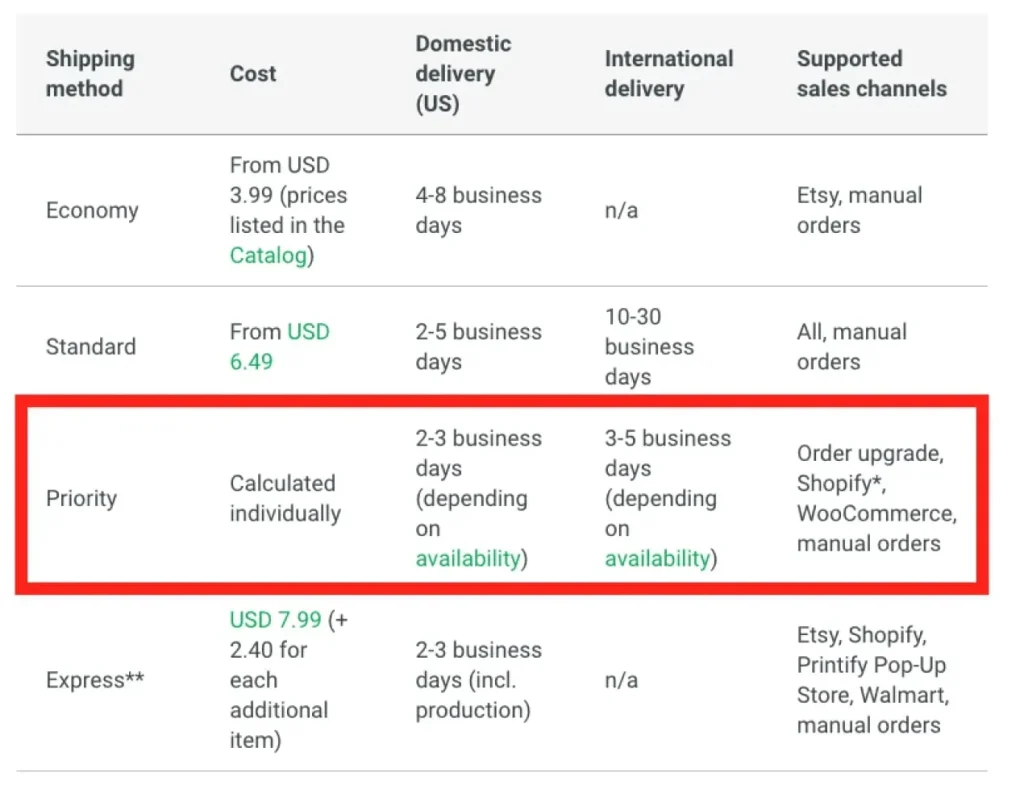
Choosing shipping options for print on demand involves balancing cost with speed and geographic coverage. Standard shipping remains economical for non-urgent orders, while expedited and express services serve customers with tighter deadlines or higher expectations. For international audiences, international shipping options introduce duties, taxes, and longer transit times that must be clearly communicated.
When selecting carrier partners and service levels, consider reliability, route consistency, and ETA accuracy to minimize post-purchase inquiries. Packaging methods that protect against damage can reduce returns, and transparent pricing helps customers understand total costs upfront. Offering a clear table of shipping options and real-time tracking enhances the buying experience and supports higher conversion rates.
POD Order Fulfillment Timeline: Setting Clear Expectations
The POD order fulfillment timeline encompasses production, processing in partner systems, packaging, and handoff to the carrier. Customers often judge your service by how fast items ship and how accurate the delivery estimates are. Defining this timeline and communicating it across touchpoints reduces surprises and builds customer confidence.
To optimize, publish a published average fulfillment time (for example, 2–5 business days) alongside best- and worst-case ranges. Use automation to trigger status updates when production starts, finishes, and ships. Provide location-based ETA estimates and build buffer times into your forecasts to absorb holidays, weather, or supplier delays.
International Shipping for Print on Demand: Navigating Cross-Border Challenges
International shipping for print on demand introduces higher costs, longer transit times, and potential customs delays. Planning for these factors and communicating them upfront helps customers set realistic expectations. Clear guidance on duties and taxes, carrier restrictions, and tracking availability is essential for a smooth cross-border experience.
Partnering with a POD network that has robust international fulfillment capabilities can simplify these complexities. Localized warehousing, regional carriers, and streamlined reverse logistics reduce transit times and improve return handling for overseas orders. Transparent policies around duties, refunds, and international return processes help maintain customer satisfaction across borders.
Measuring Success and Optimizing Customer Experience in POD Shipping
Key metrics such as on-time delivery rate, order fulfillment time, return rate, and customer satisfaction scores reveal how effectively your shipping and returns program performs. Regularly reviewing these indicators helps identify bottlenecks in production, packaging, or carrier handoffs and drives targeted improvements. Aligning measurement with your overarching POD fulfillment best practices ensures continuous quality.
Leverage dashboards and integrations with your ecommerce platform to automate status updates, refunds, and tracking notifications. Use data-driven insights to optimize shipping options, adjust pricing, and refine the returns policy. By combining proactive communication with measurable performance, you can reduce post-purchase friction and strengthen long-term loyalty among your customers.
Frequently Asked Questions
What are POD fulfillment best practices for shipping and returns?
POD fulfillment best practices start with selecting a reliable POD partner and setting clear expectations from day one. Publish a realistic POD order fulfillment timeline (production time, packaging, and carrier handoff) on product pages, offer a balanced mix of shipping options, and implement a transparent returns policy. Use automated status updates from production to delivery and provide easy-to-understand return steps to minimize friction.
Why is a clear print on demand returns policy important for customer experience and refunds?
A clear print on demand returns policy helps manage customer expectations, speeds refunds or exchanges, and reduces disputes. Define eligibility, conditions, and process (self-service portal or email), specify refunds or credits, and indicate who covers return shipping. For defective items, consider prepaid return labels to preserve trust.
Which shipping options for print on demand should I offer to optimize cost and speed?
Offer a range of shipping options for print on demand: standard for cost-conscious orders, expedited for faster delivery, and express for urgent needs. If you ship internationally, include international shipping options with clear duties and taxes at checkout, reliable tracking, and realistic ETA estimates. Evaluate carrier reliability, cost impact, and tracking accuracy.
What is a typical POD order fulfillment timeline and how should I communicate it to customers?
A typical POD order fulfillment timeline includes production time, processing, packaging, and shipping. Publish an average (for example, 2–5 business days) and a best-case/worst-case range. Use automation to update customers when production starts, finishes, and ships, and provide realistic delivery estimates by location and chosen shipping method.
How can I manage international shipping for print on demand orders and cross-border returns?
International shipping for print on demand requires transparency about duties and taxes, reliable tracking, and clear reverse logistics. Clarify who pays duties, offer local return options if possible, and plan how overseas returns are processed. Partner with a POD network with strong international coverage to reduce transit times and simplify cross-border returns.
What metrics should I track to optimize POD fulfillment best practices, including order fulfillment timeline and international shipping performance?
Track metrics such as order fulfillment time, on-time delivery rate, return rate, refund rate, customer satisfaction, and cost per order. Monitor international shipping performance, the uptake of shipping options, and the effectiveness of automated status updates. Use these insights to adjust production, carriers, and returns handling to improve the customer experience.
| Aspect | Key Points |
|---|---|
| Introduction to POD shipping and returns | Shipping, fulfillment, and returns are the backbone of a successful POD business. Speed, accuracy, and clear shipping/returns policy influence customer satisfaction and repeat business. This guide covers what to expect, how to optimize operations, and how to communicate with customers. |
| Core elements of POD shipping and returns | Three linked elements: how orders are fulfilled, how fast orders reach customers, and how reverse logistics are handled. Experience depends on your POD partner, ecommerce platform, and destinations. A well‑planned approach combines transparent options, predictable fulfillment timelines, and a fair, easy‑to‑understand returns policy. |
| POD fulfillment best practices | Choose a reliable partner and set clear expectations from day one. Know typical fulfillment timelines (production, packaging, carrier transit). Production may be 1–3 days for some items. Fast, predictable shipping depends on carrier selection, regional hubs, and domestic/international deliveries. Transparency reduces post‑purchase friction. |
| Shipping options to offer | Standard, Expedited, Express/Priority, and International shipping. Consider carrier reliability, margin impact, tracking availability/ETA accuracy, and packaging requirements. A transparent shipping experience supports higher conversions. |
| POD order fulfillment timeline and expectations | Timeline includes production, processing, packaging, and carrier handoff. Customers care about speed and accurate delivery estimates. Optimization tips: publish clear production times, automate status updates, provide realistic estimates, and build buffer times for delays. |
| Returns policy and reverse logistics | A clear, fair, visible policy reduces friction. Key elements: eligibility, condition, process, refunds/exchanges, return shipping responsibility. For POD, consider defective item exceptions and prepaid return labels to keep the experience smooth. |
| International shipping considerations | International shipping adds duties/taxes, longer transit times, and potential customs delays. Communicate duties/taxes clearly, ensure reliable tracking, plan reverse logistics from overseas, and maintain consistent branding/packaging. Partnering with a strong international network simplifies inventory and timelines. |
| Managing customer expectations and support | Clear product pages, transparent shipping estimates, and easy-to-follow returns instructions reduce friction. Proactive order tracking notifications build trust. Support scripts should emphasize empathy, reference the returns policy, and propose fair resolutions. |
| Choosing the right partner and measuring success | Metrics: fulfillment time, on-time delivery, return rate, refund rate, and customer satisfaction. When selecting a POD partner, look for transparent production times, diverse shipping options with clear pricing/ETAs, reliable international shipping, easy platform integration, and clear returns policies. |
Summary
Conclusion: Print on Demand shipping and returns is the backbone of delivering a reliable, trusted customer experience from first click to final delivery. By prioritizing transparent production times, flexible shipping options, and a fair, straightforward returns process, POD businesses can minimize post-purchase friction, protect margins, and encourage repeat purchases. Partner with a capable POD provider, monitor key metrics (fulfillment time, on-time delivery, return/refund rates, and customer satisfaction), and continuously optimize the journey—from order placement to delivery and post-purchase support.